CURAI HEALTH
In 2022 and 2023, before ChatGPT reset expectations for conversational AI, I designed and ran two research studies on how patients might trust an AI assistant with their primary healthcare.
The findings shaped how Curai, an AI-native primary healthcare provider, introduced and positioned their healthcare AI agent alongside human doctors.
26
Patients interviewed
2
End-to-end studies designed & led
7
Prototypes designed & user-tested
7.6/10
Avg. comfort with AI-assisted care
9.7/10
Top-rated use case: preventive care reminders
My Approach
This research predates the current wave of consumer AI products. There was no ChatGPT-shaped mental model to borrow from. Patients' comfort with an AI assistant had to be earned from scratch, which meant we couldn't assume anything about trust, tone, or expectations going in.
Moderated, Order-Randomized Testing
Both studies used 40–45 minute 1:1 moderated interviews over video, with prototype order randomized per participant to cancel out bias. I recruited a mix of active Curai patients and complete non-users, so we could separate "clear to anyone" from "clear once you already know the product."
Segmenting for the Variable That Mattered
For the AI study, I recruited across Gen Z, Millennial, and Gen X participants in a near-even Curai/non-Curai split, since prior experience with virtual assistants shaped trust more than the design itself. Older participants welcomed a proactive AI; younger participants wanted to opt in first.
WHAT I DELIVERED
Chat Navigation Clarity
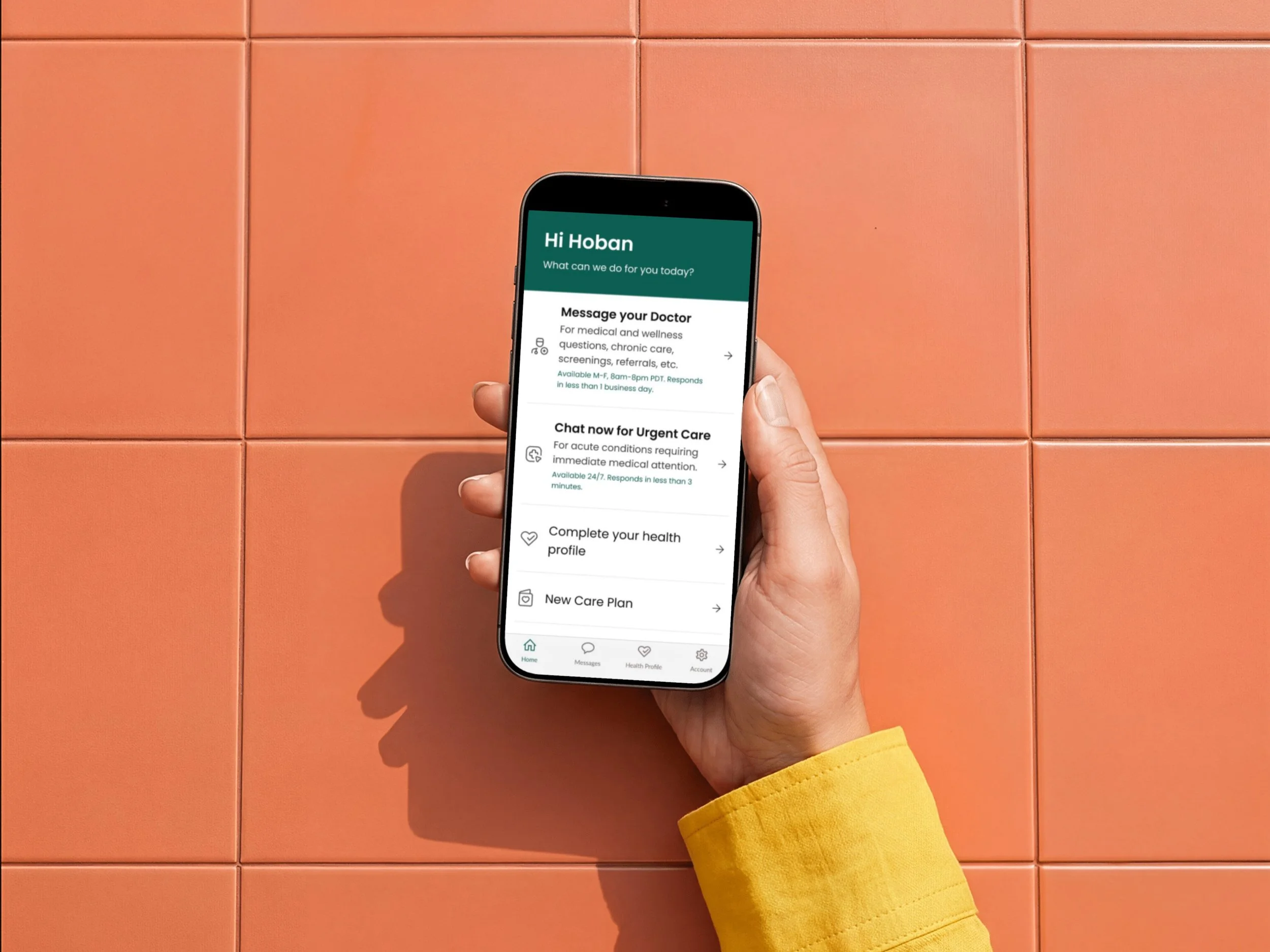
I tested the live home screen against two rewrites (one with more explanatory copy, one with less) to find the version that made Primary Care and Urgent Care unmistakably different.
The word "symptoms" reliably triggered the right mental model, but only when paired with clear response-time and care-team copy.
More copy won (3.65/5), up from (3.25/50) for the original.
AI Trust Study
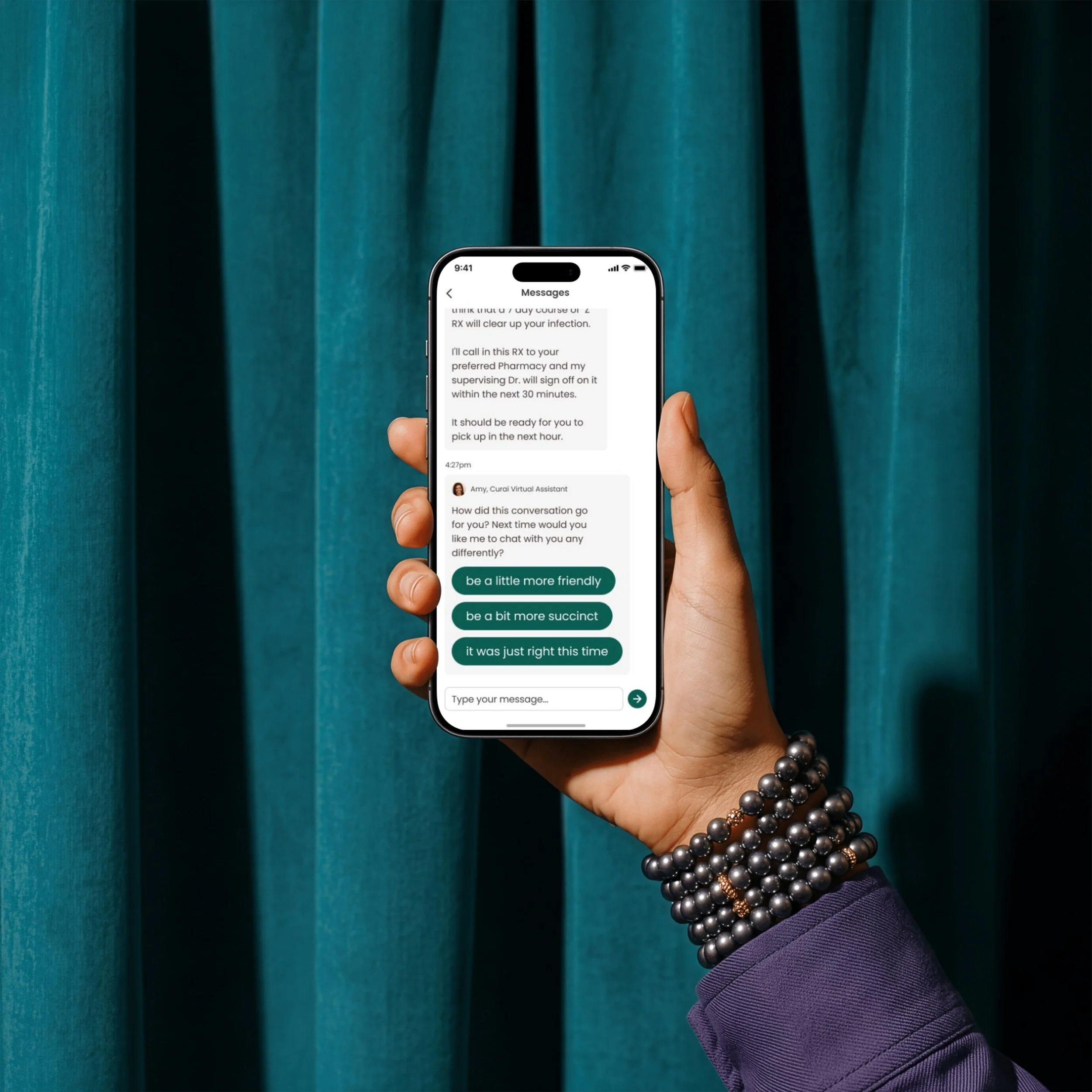
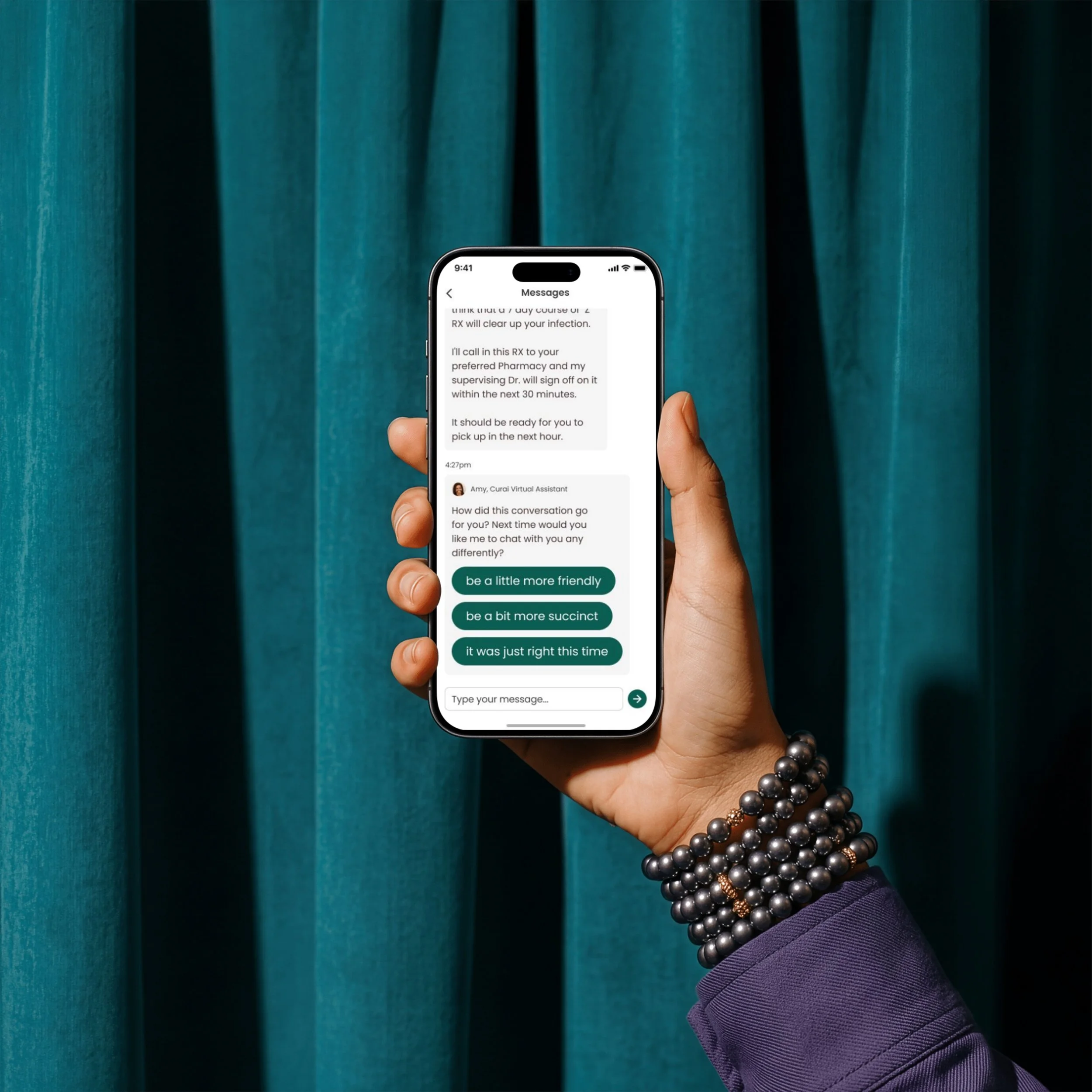
I designed and tested four versions of Amy, Curai's AI assistant. From zero customization to full manual sliders to open-ended chat-based customization, to see how much control patients actually wanted before they'd trust her with part of their care.
High-touch sliders won at 4.1/5 — but only when customization stayed optional.
Returning User Experience
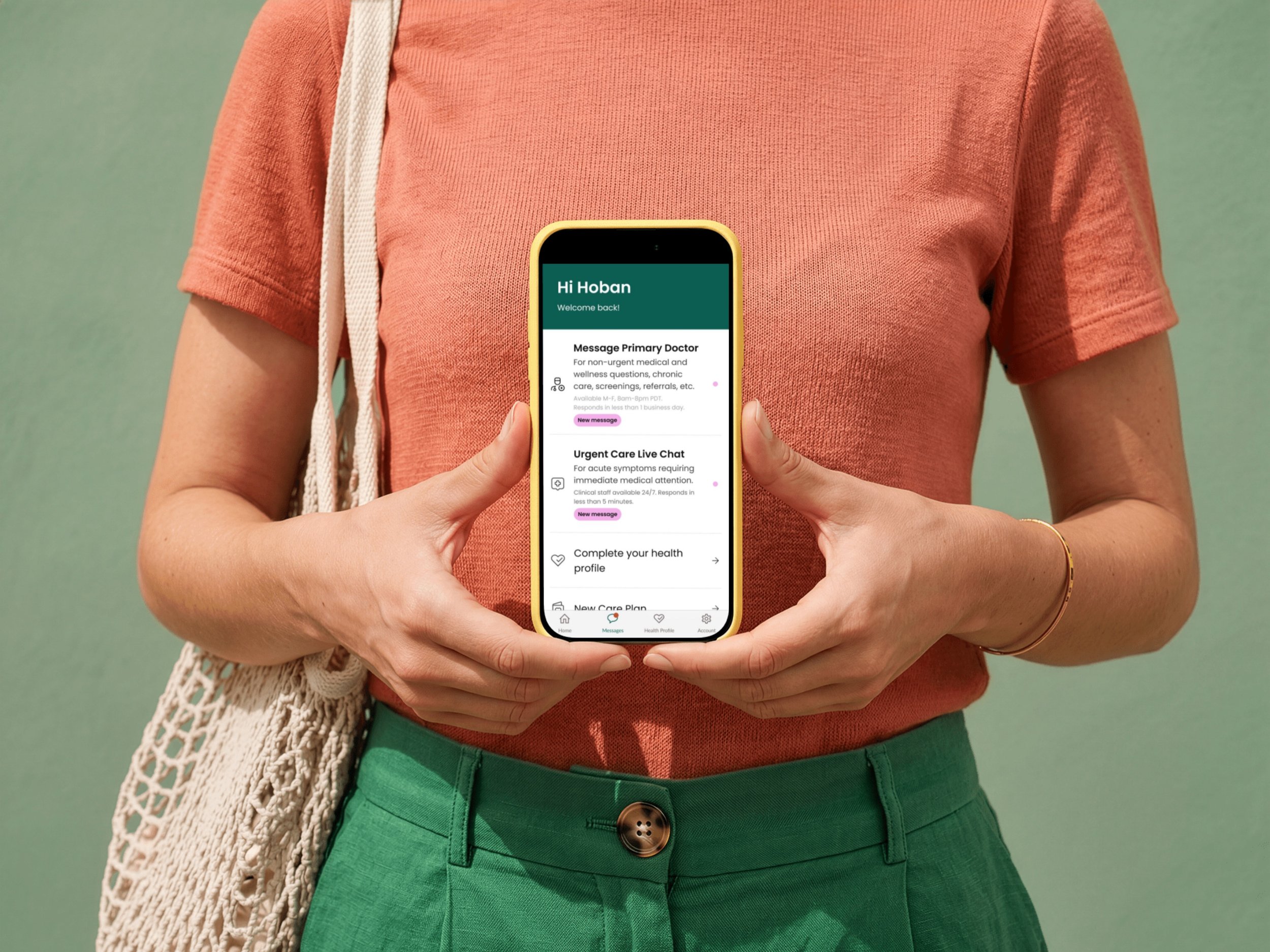
On a second visit, a small red dot wasn't enough. Several participants missed it entirely or couldn't tell what it meant. Explicit labels like "New message" and "Unread message" tested far better and became the recommended direction.
VOICE OF THE PATIENT
Comfort with AI care wasn't a single number.
It changed with how ambiguous, personal, or high-stakes the situation felt.
These are the moments that shaped the final recommendations.
"Your relationship with your doctor is not just about how accurate they are with diagnoses. It's also an empathic person who is there to help you, and you don't get that from a robot."
— Austin, not Curai patient
"It's kind of fun to build this AI personality… it kind of made me strangely more comfortable with it."
— Monique, not Curai patient
"For things that are very individualized, I would prefer to chat with a human."
— Julia, Curai patient
RECOMMENDATIONS + OUTCOMES
Lead with plain language, not reassurance copy
1
Keep the word "symptoms," and state plainly that a live clinician and not a bot is behind Urgent Care.
Make new-message cues explicit
2
Replace the subtle red dot with a labeled state like "Unread message" or "Return to live chat."
Default to a Curai-branded voice; offer customization in-flow
3
Never make setup a gate. Offer tone controls after the fact, not before.
Keep customization editable, always
4
An accessible settings panel lets patients adjust Amy's tone at any time.
Blend AI and human care instead of forcing a choice
5
Let Amy triage and gather history while a doctor signs off; patients responded best to visible collaboration, not a fork in the road.