ARGON AI
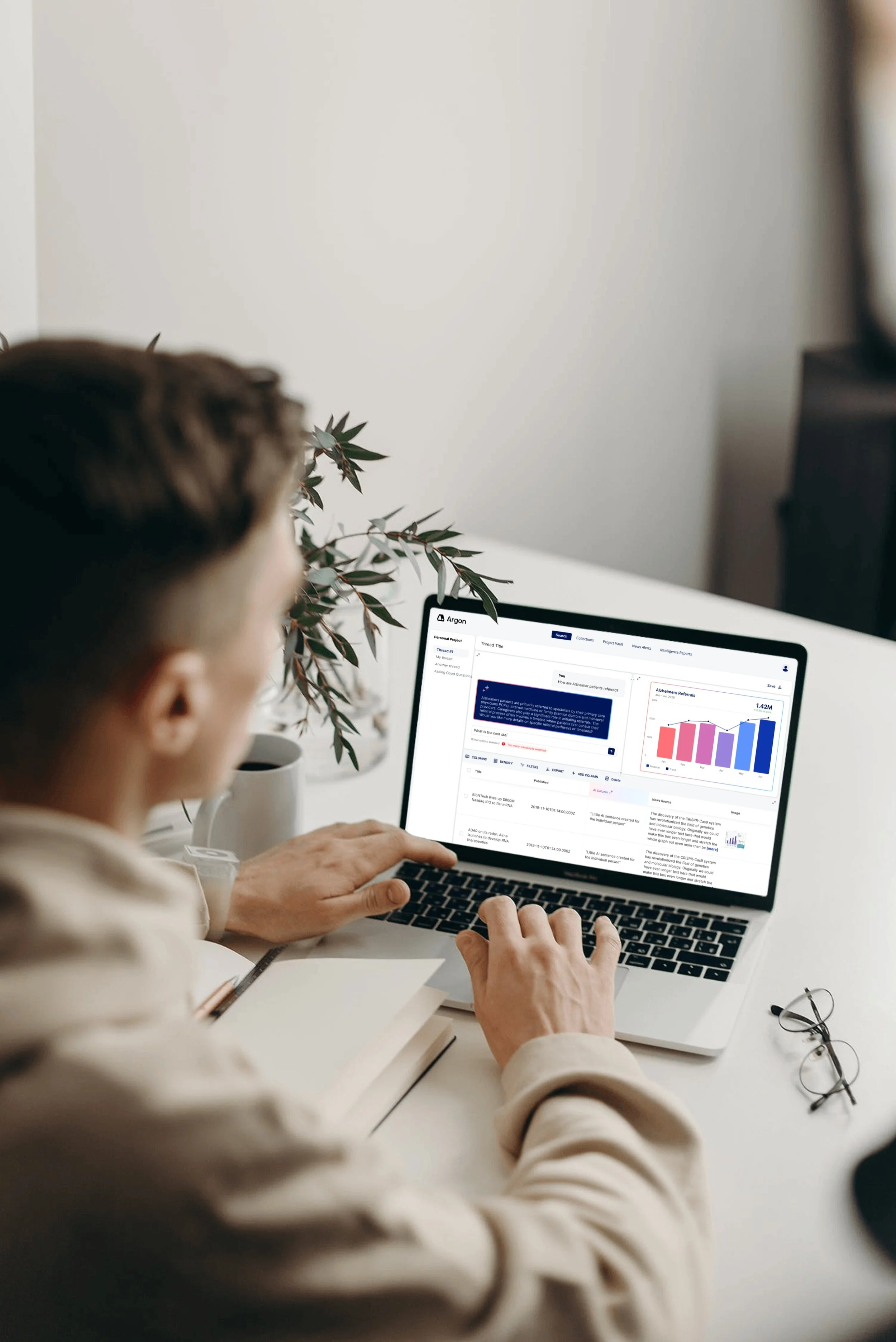
As product design consultant on Argon AI's inaugural product launch, I built the design foundation for the AI-driven experience of their pharma and biotech platform.
My Approach
Argon AI needed a foundation that could scale as fast as its ambitions. I built the design system that would support their growth, then worked directly with the founder team to ship AI-driven features on tight timelines without sacrificing quality.
Component Library
I created a detailed component library and style guide, laying the foundation for consistent, scalable design as the platform grew.
Directing Execution
I led design for the engagement, making the core product and design decisions while directing a production assistant on execution, reviewing every deliverable to keep quality consistent as we moved fast.
WHAT I DELIVERED
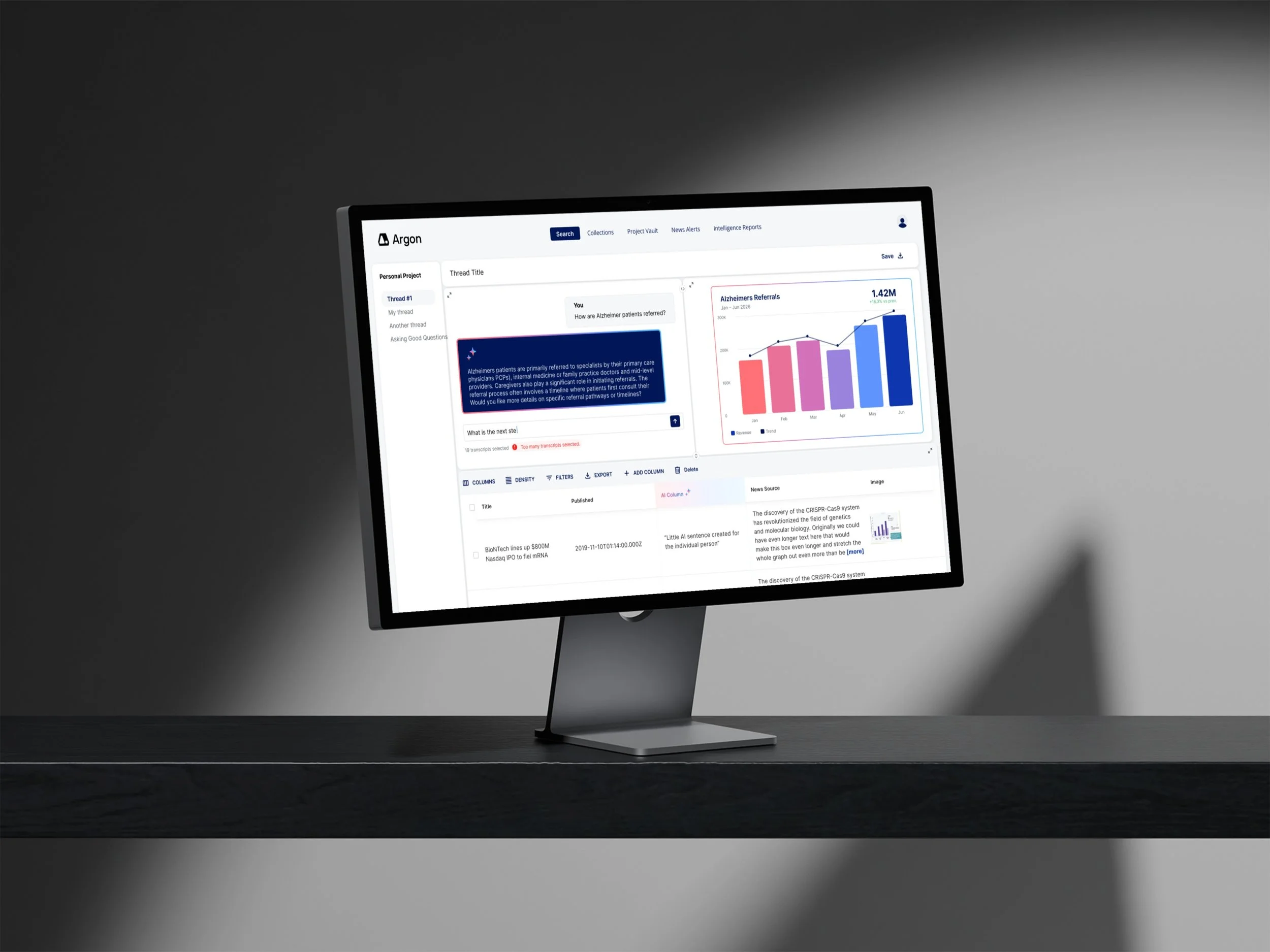
Agentic Chat Interface
Designed a conversational interface giving users direct, natural-language access to biomedical and pharmaceutical data, translating complex queries into clear, actionable answers.
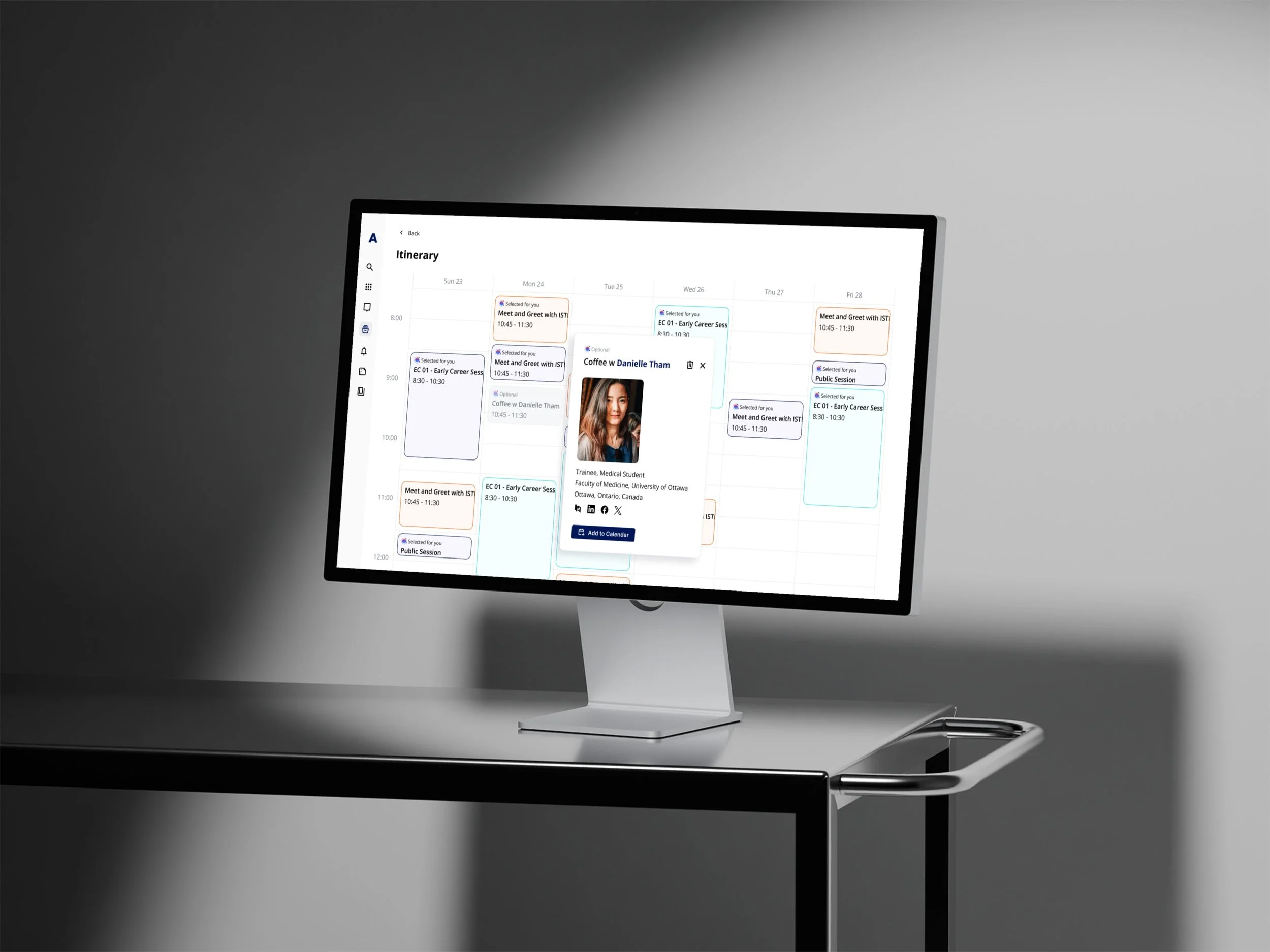
AI-POWERED Conference Calendaring
Built an AI-enabled scheduling experience that helped users navigate conference sessions and connections intelligently, reducing the manual work of planning around a packed event.
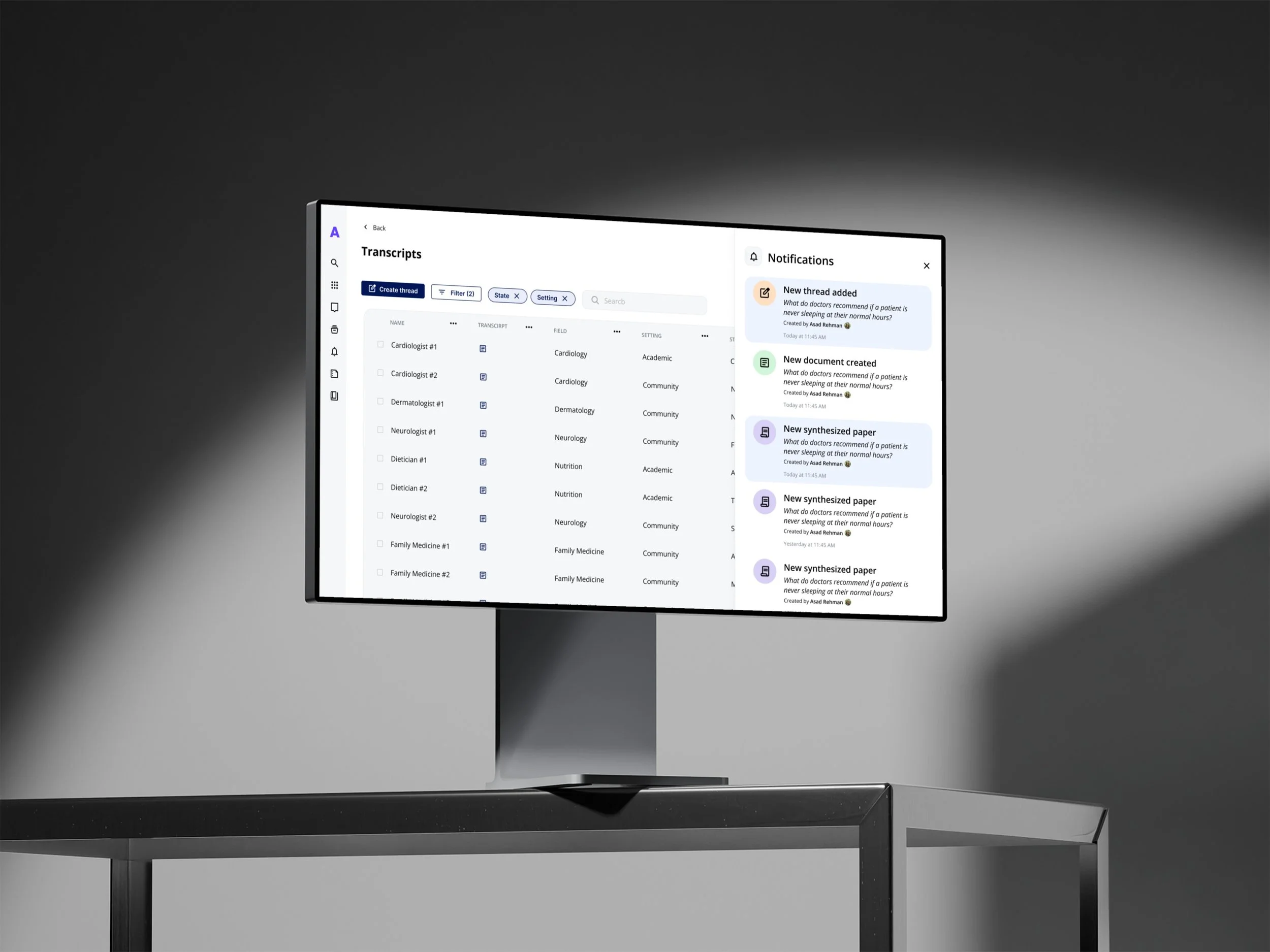
intelligence-layered File Vault
Designed a personalized file dashboard that organized around how each user actually worked, instead of a one-size-fits-all folder structure. AI suggested file organization, surfaced relevant research and reference material automatically, and got smarter the more someone used it.